Skip to main content.
Currently:69.9°F Partly Cloudy, Dry
Partly Cloudy, Dry
Comfort Index: Comfortable
 Updated17-May-2012 6:15am @ 
 
Time of Next Full Update: 6:20 am -  Station Elev: 1469 ft  
Pepper Ridge North Valley - SWN Navigation Menu
Pepper Ridge North Valley - Main Naviagation Menu

Weather Links:

       Home Page 

      Current Weather 

           Forecast Page 

          Historical Data

           Live Lightning 

            Monsoon Info 

        Satellite/Radar 

       Station Info

     Tropical Weather

        Weather Ed. 101 

          Weather Links 

      Weather Photos 

  Weather Warnings

       More Wthr Links 

New FeatureNew Feature
N.O.A.A Radio

Celebrating
6 Years on the web
2005 - 2011

& 14 Years of Data
1997 - 2011
At Pepper Ridge

 Weather Reports: 
Sep 2011New Feature
 Highlights. 
Aug 2011New Feature
 Highlights. 
2009 Weather
 Highlights. 

Side Bar Php

Current Conditions

@ 17-May-2012 6:15am
69.9°F Warmer 2°F than last hour.
Temp Change: °F /hr
Partly Cloudy, Dry  Partly Cloudy, Dry
Feels Like: 70 °F
Humidity: 27
Dew Point: 34.4 °FIncreased 1.6°F since last hour.
Wind: Wind from NNE NNE@
0.1 mph
Gust: 0.0 mph
Pressure: 29.75 in Rising 0.02 inHg/hour
Rising slowly
Solar Rad: 62%
87 W/m2
UV Index: 0.0
None
Rain Today: 0.00 in
Rain Rate: 0.00 in
Rain Month: 0.020 in
Rain Year: 1.339 in

Almanac

Sunrise: 5:25 AM
Sunset: 7:23 PM
Moonrise: 3:17 AM
Moonset: 4:39 PM
Waning Crescent Moon
Waning Crescent Moon, Moon age: 26 days,4 hours,59 minutes,12%
12%
Illuminated

Daily Min/Max

Today's High Temp: 76.9°F
12:13am
Today's Low Temp: 67.8°F
5:20am
Today's High Humidity: 29%
5:59am
Today's Low Humidity: 21%
1:33am
Today's High Dewpoint: 36.6°F
12:41am
Today's Low Dewpoint: 30.3°F
3:14am
Today's High Barometric Pressure: 29.752 in/Hg
6:11am
Today's Low Barometric Pressure: 29.695 in/Hg
12:21am
Today's High Wind Speed: 5.0 mph
2:42am
Today's
High UV:
10.1
 Very High 
12:09pm
Today's
High Solar:
1024 W/m2
12:10pm
Today's High Rain Rate: 0.000 in/min
7:00pm
Today's High
Hourly Rain Rate:
0.000 in/hr
Days Since
Last Rain:
6 Days

Member of the:
Weather Topsites

Lower Sidebar Page
Pepper Ridge Weather Station
USA Weather Finder
United States Weather Group
Wunderground

Sky Warn

CWOP 3794 Quality Control Logo
CW 3794

For more information
about this site
contact the
Web Master

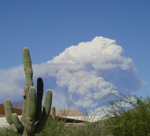
Willow Fire Pyro Cumulus Cloud

Return to Top
of Page

Welcome to Pepperridge North Valley's
Hawaiian Volcano Activity Page


ALOHA! Welcome to Paradise!

Enjoy These Photos from Hawaii - Click on picture for full Size View!

Hawaii Kilauea Eruption - Hawaii
Lava Erupts from Kilauea Crater - Hawaii, Hi


Kilauea's Lava flow reaches the Ocean - Hawaii
Kilauea's Lava flow reaches the Ocean - Hawaii, Hi

All Photos are © 2005- 2010 by J. Summers & The Pepper Ridge North Valley Weather Station
All rights reserved. Unauthorized duplication or distribution is prohibited


Current Reported Volcanic Activity from - Hawaii's Volcano National Park

Hawaii Volcano National Park - Current Update


HAWAIIAN VOLCANO OBSERVATORY DAILY UPDATE

Wednesday, May 16, 2012 8:32 AM HST (Wednesday, May 16, 2012 18:32 UTC)

This report on the status of Kilauea volcanic activity, in addition to maps, photos, and Webcam images (available using the menu bar above), was prepared by the USGS Hawaiian Volcano Observatory (HVO). Hawai`i Volcanoes National Park status can be found at http://www.nps.gov/havo/ or 985-6000. All times are Hawai`i Standard Time.

KILAUEA VOLCANO (CAVW #1302-01-)
19°25'16" N 155°17'13" W, Summit Elevation 4091 ft (1247 m)
Current Volcano Alert Level: WATCH
Current Aviation Color Code: ORANGE

Activity Summary for past 24 hours: One-to-two-day-long back-to-back DI tilt events continued during which lava lake levels rose with inflation and fell with deflation; lava was generally at high levels in both summit and rift vents. At Pu`u `O`o, glow persisted from the usual sources and lava was visible in the eastern collapse pit; to the southeast, surface flows from new breakouts advanced but had not reached the ocean. Seismic tremor levels were generally low; gas emissions were elevated.

Past 24 hours at Kilauea summit: The summit tiltmeter network recorded the switch to DI inflation at 7 pm last night and the lava lake level started to rise at about the same time; late last night, the spattering sink at the southwest edge of the lake became active increasing to very vigorous early this morning pushing short flows over the inner ledge. The most recent (preliminary) sulfur dioxide emission rate measurement was 300 tonnes/day on May 11, 2012. Although not measured this morning, small amounts of ash-sized tephra, including fresh bits of spatter from spattering at the edge of the lava lake, were likely wafted out of the vent within the gas plume and deposited on nearby surfaces.

The GPS network recorded possible weak extension although the long-term trend is difficult to see through the muddle of DI events. Seismic tremor levels were low. Seven earthquakes were strong enough to be located beneath Kilauea volcano: 2 within the southwest rift zone, 3 beneath the south summit area, and 2 on south flank faults.

Background: The summit lava lake is deep within a ~160 m (520 ft) diameter cylindrical vent with nearly vertical sides inset within the east wall and floor of Halema`uma`u Crater. Its level fluctuates from about 60 m to more than 150 m (out of sight) below the floor of Halema`uma`u Crater. The vent has been mostly active since opening with a small explosive event on March 19, 2008. Most recently, the lava level of the lake has remained below an inner ledge (60 m or 200 ft below the floor of Halema`uma`u Crater on May 9, 2012) and responded to summit tilt changes with the lake receding during deflation and rising during inflation.

Past 24 hours at the middle east rift zone vents: Lava flow activity continued on the pali and the coastal plain southeast of Pu`u `O`o. Webcam images showed that the flows advanced more overnight than during the past 2 nights across the coastal plain overnight but there was no ocean entry.

The tiltmeter on the north flank of Pu`u `O`o cone recorded the switch to DI inflation last night. The eastern pond lava level remained stable even during a brief lava emission from the south crater floor source between 5 and 6 pm last night. Seismic tremor levels near Pu`u `O`o remained low. GPS receivers on opposite sides of the cone recorded weak extension. The most recent (preliminary) sulfur dioxide emission rate measurement was 400 tonnes/day on May 8, 2012, from all east rift zone sources.

Background: The eruption in Kilauea's middle east rift zone started with a fissure eruption on January 3, 1983, and has continued since at Pu`u `O`o Cone, or from vents within a few kilometers to the east or west, with few interruptions. A fissure eruption on the upper east flank of Pu`u `O`o Cone on Sept. 21, 2011, drained the lava lakes and fed a lava flow that advanced southeast through the abandoned Royal Gardens subdivision to the ocean within Hawai`i Volcanoes National Park in early December. The ocean entry has been inactive since late December but the flows have remained intermittently active on the pali and the coastal plain. In general, activity waxes with inflation and wanes with deflation.

Hazard Summary: East rift vents and flow field - near-vent areas could erupt or collapse without warning with spatter and/or ash being wafted within the gas plume; potentially-lethal concentrations of sulfur dioxide gas may be present within 1 km downwind of vent areas. All recently active lava flows are within Hawai`i Volcanoes National Park, adjacent State land managed by the Department of Land and Natural Resources, and private property within the Royal Gardens subdivision; the lava flows do not pose a hazard to any structures not already within the County-declared mandatory evacuation zone. Kilauea Crater - ash and Pele's hair can be carried several kilometers downwind; potentially-lethal concentrations of sulfur dioxide can be present within 1 km downwind.

Viewing Summary: East rift zone flow field - Active lava flows within the closed-access Kahauale'a Natural Area Reserve (NAR) and the evacuated Royal Gardens subdivision can only be viewed from the air. Under favorable weather conditions, the flows can be seen from the County Viewing Area at Kalapana (Lava hotline 961-8093) and in the R2, R3, and R4 webcams. Pu`u `O`o Cone and Kilauea Crater - these areas are within Hawai`i Volcanoes National Park; access and viewing information can be found at http://www.nps.gov/havo/planyourvisit/lava2.htm.

Maps, photos, Webcam views, and other information about Kilauea Volcano are available at http://volcanoes.usgs.gov/hvo/activity/kilaueastatus.php. A daily update summary is available by phone at (808) 967-8862.

A map with details of earthquakes located within the past two weeks can be found at http://hvo.wr.usgs.gov/seismic/volcweb/earthquakes/

A definition of alert levels can be found at http://volcanoes.usgs.gov/activity/alertsystem/index.php

Definitions of Terms Used:

DI tilt event: DI is an abbreviation for 'deflation-inflation' and describes a geophysical event of uncertain volcanic significance. DI events are recorded by tiltmeters at Kilauea summit as an abrupt deflation of up to a few microradians in magnitude lasting several hours (weak DI events) to 2-3 days (strong DI events) followed by an abrupt inflation of approximately equal magnitude. The tilt events are usually accompanied by an increase in summit tremor during the deflation phase. A careful analysis of these events suggests that they may be related to changes in magma supply to a storage reservoir at less than 1 km depth, just east of Halema`uma`u crater. Usually, though not always, these changes propagate through the magma conduit from the summit to the east rift eruption site, as many of the DI events at Kilauea summit are also recorded at a tiltmeter at Pu`u `O`o delayed by several hours. DI events often correlate with lava pulses and/or pauses in the eruption at the Pu`u `O`o/Peace Day vents.

fill-and-drain, rise/fall cycles or high lava stands: one of the cyclical behaviors exhibited by the summit lava lake. A cycle starts with a rise in lava level, a decrease in summit tremor amplitude, and a small decrease in tilt. After a period of minutes to hours, the lava will abruptly drain back to its previous level, seismic tremor amplitude will increase for a short time (a seismic tremor burst), and summit tilt will return to its previous level. Although not measured continuously, spot checks of gas emissions demonstrate that far less gas is released during the high lava stand than during its draining phase suggesting that, during the high lava stand, lava is puffed up with gas trapped by crusts on the lava surface; the gas plume will also get thin and wispy during these cycles returning to more robustness afterward.

perched lava lake: a lava lake within a rim that is progressively built up by overflows of lava that have cooled and solidified. The most recent example of a perched lava lake is currently active within Pu`u `O`o maintaining a rim standing several meters (yards) above the crater floor. In many ways, a perched lava lake resembles an above-ground swimming pool. Overflows from the pond add layers to the surrounding crater floor building it higher; the overflows also build up the perched lake rim, continually keeping the lake rim raised above the floor.

mauka, makai: Hawaiian terms for directions relative to the coast - makai or ma kai (toward the coast) and mauka or ma uka (toward the highlands or away from the coast).

composite seismic events: is a seismic signal with multiple distinct phases that has been recorded frequently at HVO from the Halema`uma`u Overlook vent area since its explosive opening in March, 2008. For the composite events recorded at Halema`uma`u, we typically see an initial high frequency vibration lasting for a few seconds that have been correlated with rockfalls. This is followed by about 30 seconds of a long-period (LP) oscillation with an approximately 2- to 3-second period. The final phase of the signal is several minutes of a very-long-period (VLP) oscillation with an approximately 25- to 30-second period. The LP signals are interpreted to be from the uppermost portion of the conduit and VLP signals are interpreted to be fluid passing through a deep constriction in the conduit through which lava rises to the pond surface we see in the webcam.

Halema`uma`u Overlook vent: has been difficult to describe concisely. The vent is actually a pit, or crater, in the floor of the larger Halema`uma`u Crater in the floor of the larger Kilauea caldera or crater - a crater within a crater within a crater. It is easiest to describe as a pit inset within the floor of a crater within a caldera. The pit is about 140 m (460 ft) in diameter at the Halema`uma`u Crater floor, is about 50 m in diameter at the pit floor, and is about 200 m (660 ft) deep. As of November, 2009, a lava pond surface has been visible in a hole in the floor of this pit.

glow: light from an unseen source; indirect light.

incandescence: the production of visible light from a hot surface. The term also refers to the light emitted from a hot surface. The color of the light is related to surface temperature. Some surfaces can display dull red incandescence at temperatures as low as 430 degrees Centigrade (806 degrees Fahrenheit). By contrast, molten lava displays bright orange to orange-yellow light from surfaces that are hotter than 900 degrees C (1,650 degrees F).

CD: Hawai`i County Civil Defense

tonne: metric unit equal to 1,000 kilograms, 2,204.6 lbs, or 1.1 English tons.

tephra: all material deposited by fallout from an eruption-related plume, regardless of size.

ash: tephra less than 2 mm (5/64 inches) in size.

microradian: a measure of angle equivalent to 0.000057 degrees.

More definitions with photos can be found at http://volcanoes.usgs.gov/images/pglossary/index.php.

The Hawaiian Volcano Observatory is one of five volcano observatories within the U.S. Geological Survey and is responsible for monitoring volcanoes and earthquakes in Hawai`i. Source: Kilauea Volcano Observatory

Kilauea Volcano Cam


This is a static image of Kilauea, The VolcanoCam image automatically updates approximately every two hours.
Volcano image courtesy of ...
Live webcam images of various Hawaii volcanoes
Hawaiian Volcano Observatory Webcam


Information courtesy of ...
U.S. Geological Survey Hawaiian Volcano Observatory (HVO).
USGS Cascades Volcano Observatory
Cascade Range Current Update
USGS Alert-Notification System for Volcanic Activity
Volcano Observatories: Alaska
Volcano Observatories: Cascades
Volcano Observatories: Hawaii
Volcano Observatories: Long Valley
Volcano Observatories: Mariana Islands
Volcano Observatories: Yellowstone

Please Visit our other Hawaiian Pages: Hawaiian Earthquake Activity Page ·  Hawaiian Tsunami Info  · Hawaiian Weather Page


Kãne‘ohe and Kãne‘ohe Bay with the Koolau Mountains as backdrop - Windward - Oahu, Hawaii

Kaneohe and Kaneohe Bay - Oahu, Hi

Member of the:
LightningRing
TiggrWeather Topsites Top 100 Weather Sites

 Pepper Ridge North Valley Random Weather Facts

HEAVY RAIN/FLASH FLOOD
In Arizona, typically, the heaviest rain falls during the summer thunderstorm season, or Monsoon, in our state. The rain can accumulate very quickly, resulting in flooded streets or washes, and can even cause deaths via flash flooding. In Phoenix, the greatest rainfall in a 24 hour period was 4.98 inches on July 1-2, 1911. This total is quite a bit less than the Arizona record of 11.4 inches, which fell on Workman Creek (near Globe) on September 4-5, 1970.

Get the Facts PHP


Page layout last updated on Feb 20th, 2010